

Migraine Surgery
Treating the Source of Chronic Migraine Pain
For many patients living with chronic migraine headaches, years are spent trying medications, injections, lifestyle modifications, and consultations with multiple specialists before learning that surgery may even be an option.
For carefully selected patients, migraine surgery offers an opportunity to reduce or eliminate one of the peripheral sources that can trigger migraine attacks.
Dr. David Branch has been performing migraine surgery since 2002 and has completed more than 1,600 migraine decompression procedures on patients from throughout the United States and internationally. He was among the earliest surgeons on the East Coast to perform migraine surgery after training with internationally recognized pioneer Dr. Bahman Guyuron, and has helped train other surgeons while serving in leadership roles within the Migraine Surgery Association.
Although migraine surgery now represents a smaller portion of Dr. Branch's practice, he continues to evaluate and treat carefully selected patients seeking a surgical solution for chronic migraine headaches.

Customer
"Nothing seemed to work for my migraines.
Dr. Branch was my last resort."
Understanding Migraine Surgery
Migraine surgery is not brain surgery.
Instead, it focuses on relieving chronic irritation or compression of selected sensory nerves outside the skull that may trigger migraine attacks in susceptible individuals.
Research over the past two decades has shown that many migraine patients have identifiable peripheral trigger sites involving branches of the trigeminal and occipital nerves. In appropriately selected patients, reducing chronic stimulation of these nerves may significantly decrease headache frequency, severity, duration, or all three.
Treatment is individualized because every patient's migraine pattern is different.

Is Surgery Right for You?
Not every migraine patient is a surgical candidate.
The best candidates often have:
- Well-defined trigger locations.
- Migraine headaches beginning consistently in the same area.
- Failure of appropriate medical therapy.
- Temporary improvement following Botox injections or nerve blocks.
- Symptoms suggesting peripheral nerve irritation or compression.
Many patients continue to work closely with their neurologist before and after surgery, and collaboration with headache specialists remains an important part of comprehensive migraine care.
Surgical Treatment
Depending upon the trigger site, surgery may involve releasing compressed sensory nerves, removing small muscles or blood vessels that chronically irritate the nerves, or correcting selected nasal contact points known to trigger headaches.
Common trigger areas include:
- Forehead
- Temples
- Back of the head (greater occipital nerves)
- Nose
- Less commonly, other peripheral nerve trigger sites
Most procedures are performed on an outpatient basis under sedation or general anesthesia.
Our Philosophy
Migraine surgery should never replace thoughtful neurological care.
Instead, it should become part of a comprehensive treatment plan for carefully selected patients whose headaches appear to originate, at least in part, from peripheral nerve compression or irritation.
The goal is not simply to reduce pain.
The goal is to reduce the frequency, severity, and impact of migraine headaches so patients can return to work, family, travel, and the activities that chronic migraines have taken away.
Experience Matters
Migraine surgery remains a highly specialized field.
Over more than two decades, Dr. Branch has:
- Performed more than 1,600 migraine decompression procedures.
- Treated patients from across the United States and internationally.
- Helped introduce migraine surgery to the East Coast.
- Trained visiting surgeons.
- Served in leadership within the Migraine Surgery Association.
Continued refining patient selection based upon evolving scientific evidence and long-term outcomes.
The Consultation Matters Most
The most important decision is not whether to have surgery.
It is determining whether surgery is the right treatment for your particular headaches.
During your consultation, Dr. Branch carefully reviews your headache history, previous treatments, imaging studies when appropriate, physical examination, and trigger patterns before discussing whether migraine surgery may offer meaningful benefit.
Our goal is to recommend surgery only when the likelihood of improvement justifies the risks and recovery involved.
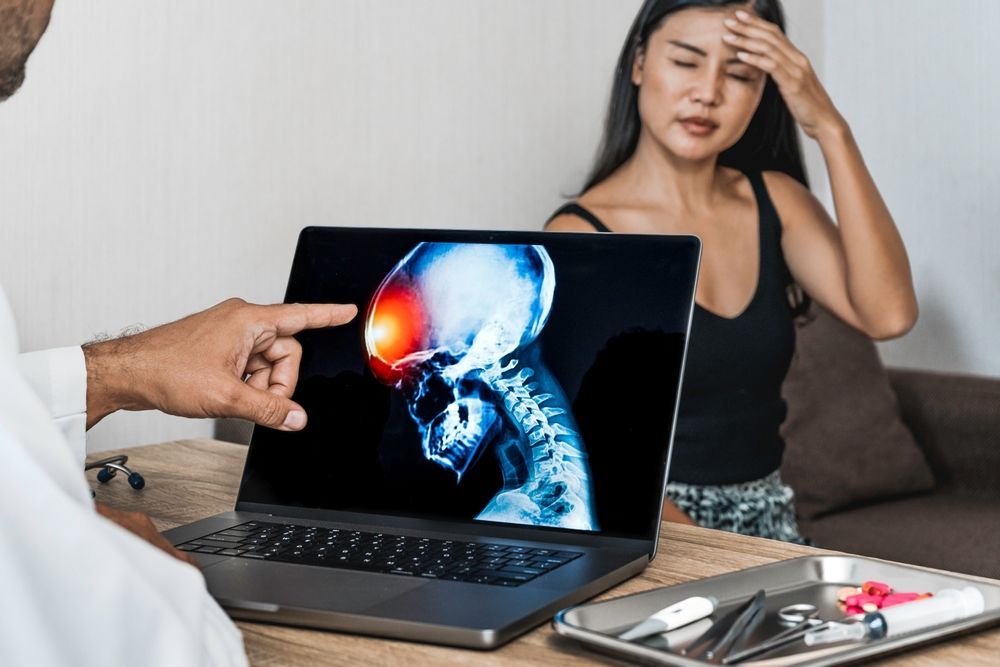
Questions About Treatment Options
What is migraine surgery/trigger point surgery/nerve decompression surgery for headaches?
Part of the evaluation that helps determine success involves the identification of peripheral migraine trigger zones that are responsible for the triggering of some, if not all of your migraine headaches. Peripheral triggers involve irritation, compression, vibratory stimulation, or simply errant signal interpretation through primarily branches of the trigeminal nerve (cranial nerve #5) and or the greater occipital nerve.
Nerve decompression is a migraine surgery that involves the decompression of several of the small terminal branches of the trigeminal and of the occipital nerves. When intranasal vibratory stimulation through the trigeminal nerve is felt to be a trigger, elimination of the vibration through opening of the nasal airway is performed.
Is Surgery right for me?
Generally, the surgery for migraines will be done as an outpatient procedure under sedation or general anesthesia. Patients with signs of localized nerve pain are the most likely to be offered surgery, while Botox testing or treatment may be the best first option for those with more globalized headaches.
Often the surgery involves decompressing the affected nerves by removal of muscle and sometimes vessels or even bone that is pressing on the nerves. The nerves are often covered with fatty (non-contracting) tissue.
When performed on the brow, the surgery is similar to a cosmetic brow lift.
In back of the neck, the greater occipital nerve is treated similarly through a hidden incision in the scalp.
Nasal airway surgery is a variation of the commonly performed procedure for a deviated septum resulting in breathing difficulty. Incisions are small and hidden.
How long does the procedure take?
The surgical procedure time can vary depending on the number of trigger sites (1 to 5, but usually 2-3). Each zone or trigger site procedure can take between 15 minutes and 2 hours.
What is the Success rate for Migraine Surgery?
The success rate for the treatment is 90%, with at least a 50% reduction of migraine symptoms. Approximately 35% of patients no longer experience headaches.
Dr. Branch's first patient has gone from chronic daily headaches to ONE headache over the span of 9 years since the day of her surgery.
How long does the surgery last?
Research has shown headache improvement/elimination to last at least 5 years. Dr. Branch's first patient has had 15 years of complete relief since her surgery in 2003.
Are there any side effects to any of these treatments?
Despite the sound of "migraine surgery", it is not brain or spine surgery. It is a field that focuses on shallow anatomy and sensory nerves, or employs familiar minimally invasive surgical techniques in the nasal airway. All surgery is serious and carries risk, but after over 1600 litigation-free migraine surgeries, complaints are rare and side effects usually involve some form of numbness or improvement in nasal breathing. The following is a list of possible side effects - Mild bruising or swelling lasting a few days up to 14 days, usually, Temporary (and rarely permanent) numbness in the forehead and scalp, Intense itching as sensation returns and nerves recover from surgery, Change in brow appearance and movement, Change in nasal breathing, usually improved, Migration of pain to a new or existing area. Talk to your doctor or physician for more information
Location
Northeastern Interventional Pain and Migraine
1945 Congress St
Building C
Portland, ME 04102
207-835-7079 Phone
207-947-1894 Fax
Bangor Plastic and Hand Surgery
55 Broadway
Bangor, ME 04401
Appointments & Consultations
To schedule an appointment, please call 207-835-7079 or email us at stacy@neipm.com. Our team will be happy to assist you in any way possible, and all efforts will be made to accommodate your schedule. Please be sure to let us know the best way to reach you.
Have Questions? Reach Out To Us Today.
Take This First Step – We’re Here For You!
Contact Us
We will get back to you as soon as possible.
Please try again later.